

SaaS Management Full Explained: Everything You Need to Know


SaaS Management Full Explained: Everything You Need to Know
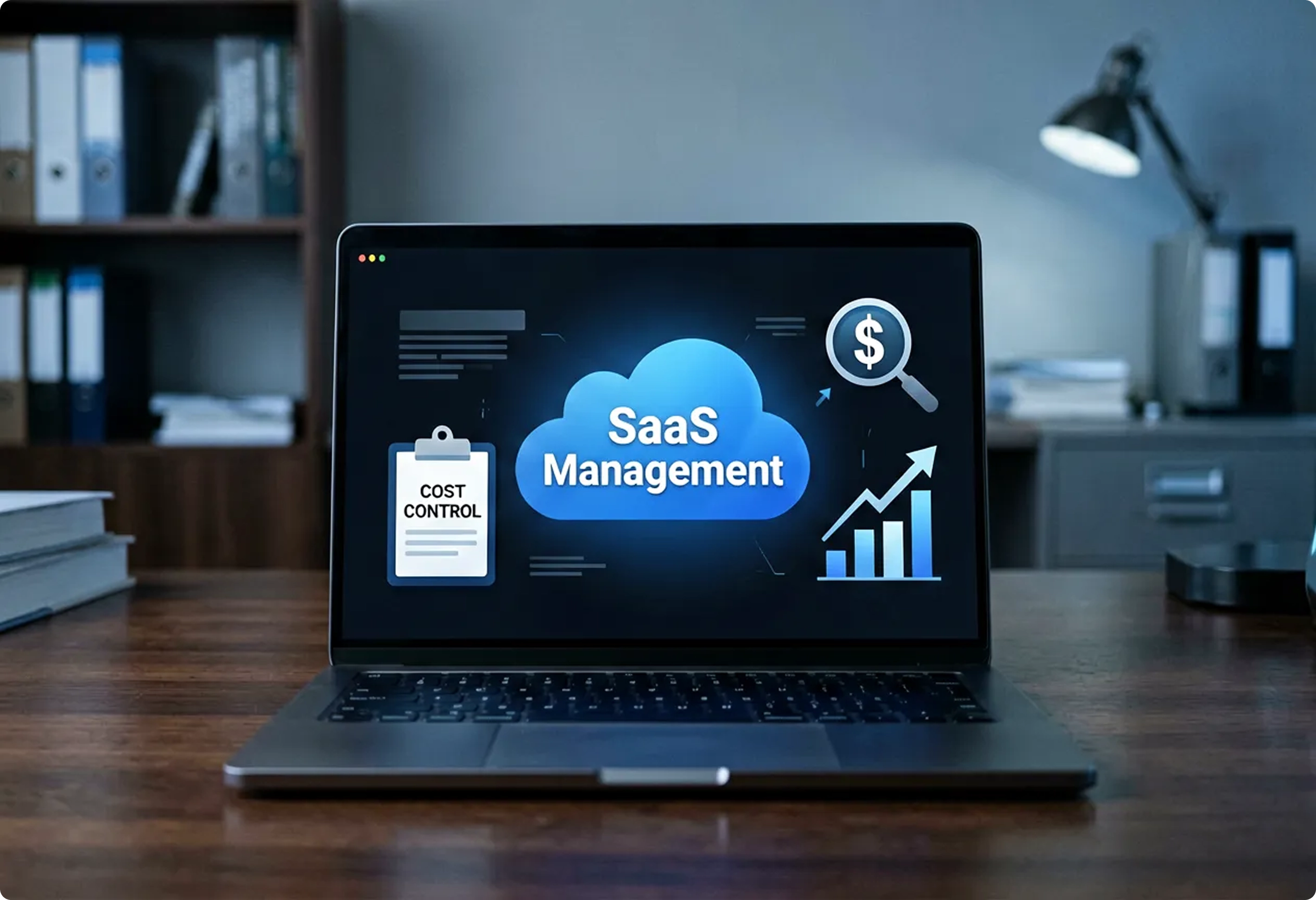
Software subscriptions have quietly become one of the largest line items in a company’s budget, and one of the least understood. Employees sign up for tools on a credit card, departments stack up redundant apps, and IT teams scramble to maintain visibility over a portfolio that grows faster than anyone can track. This is the problem that SaaS management was built to solve. In this guide, you will learn exactly what SaaS management is, why it matters, and how organizations can approach it strategically, whether they are managing 50 apps or 500.
What Is SaaS Management?
SaaS management is the holistic practice of discovering, tracking, optimizing, and governing all the software-as-a-service applications a company uses. It encompasses the full lifecycle of every SaaS tool from the moment a subscription is purchased, through ongoing usage and renewals, to eventual offboarding when the tool is no longer needed. Unlike traditional on-premises software, which IT departments purchased and installed centrally, SaaS applications can be bought by anyone in an organization with a company card. A marketer can spin up a new analytics tool in minutes. A developer can subscribe to a productivity suite without IT approval. This decentralization has created enormous value in terms of agility and speed, but it has also created blind spots around cost, security, and redundancy. SaaS management brings structure to this complexity. It is sometimes called by other names, such as SaaS operations, application portfolio management, SaaS spend management, or software asset management, but the goal is always the same: regain control of your software landscape.
Why SaaS Management Has Become Essential
The scale of enterprise SaaS usage has grown to a point where informal management simply cannot keep up. Consider the numbers:
- The average company now uses around 275 SaaS applications, up from fewer than 100 just a decade ago.
- Average annual SaaS spending reached $49 million per organization in 2024 — roughly $4,830 per employee.
- IT teams directly control only around 15% of SaaS spending. Business units control the rest.
- Between 20% and 30% of SaaS spending is typically wasted on unused, underused, or duplicate licenses.
Gartner projects worldwide SaaS spending will reach $299 billion in 2025 — a nearly 20% increase from the prior year. Much of that growth is being driven by vendor price increases, the bundling of AI features into existing subscriptions, and new consumption-based pricing models that are harder to predict and budget for.
Without a structured approach to SaaS management, organizations pay for tools that nobody uses, expose sensitive data to applications that have not been properly vetted, and miss renewal windows that lock them into unfavorable contracts.
The Four Pillars of SaaS Management
Effective SaaS management rests on four interconnected capabilities. Together, they create a complete picture of your software portfolio and the levers to optimize it.
1. SaaS Discovery and Inventory
Before you can manage your SaaS portfolio, you need to know what is in it. Discovery involves identifying every application in use across the organization, including those purchased or adopted without IT’s knowledge, a phenomenon commonly called shadow IT.
Discovery is harder than it sounds. Employees may use personal accounts to access work-related tools or sign up for free tiers that later convert to paid plans. Some estimates suggest that 65% of IT professionals have discovered employees using unsanctioned SaaS applications at work. A comprehensive inventory requires integrating data from multiple sources: expense reports, single sign-on (SSO) logs, browser extensions, and corporate card transactions.
2. License Management
Once you know what you have, the next step is understanding whether you are paying for the right number of seats at the right tier. License management involves matching the number of purchased licenses to actual usage, reclaiming licenses from inactive users, and right-sizing plans to avoid over-provisioning. This is often where the fastest cost savings are found. Many organizations discover that 20% or more of their licenses are assigned to employees who have left, or to active employees who have simply stopped using a particular tool. Reclaiming these licenses and reassigning or canceling them is one of the most direct ways to reduce SaaS spend without cutting access that people actually need.
3. Renewal Management
SaaS contracts auto-renew by default, often with little notice. Without a centralized renewal calendar, organizations find themselves locked into another year of a tool they were planning to cancel, or mssing the window to negotiate better pricing. Good renewal management means tracking every contract expiration date, initiating vendor conversations 60 to 90 days in advance, and using usage data to negotiate from a position of knowledge. If your team is using only 40% of the licenses for a given tool, you have real leverage to reduce the contract size or secure a price reduction.
4. Security and Compliance Governance
Every SaaS application that employees connect to company data is a potential security risk. When those applications are adopted without IT oversight, those risks multiply. SaaS management includes establishing policies for which tools are approved, what data they can access, and how access is controlled. This pillar also covers regulatory compliance. If your organization must comply with regulations like GDPR, HIPAA, or SOC 2, you need to ensure that every application handling relevant data meets your compliance requirements. Ungoverned SaaS adoption is a common source of compliance gaps during audits.
Common Challenges SaaS Management Addresses
SaaS Sprawl
SaaS sprawl occurs when the number of applications grows beyond the organization’s ability to manage them effectively. Teams adopt tools for specific projects, the projects end, and the subscriptions continue. Overlapping tools — three different project management platforms, four video tools, two CRMs — are a natural byproduct of decentralized purchasing. Sprawl drives up costs, creates confusion, and fragments institutional knowledge across too many systems.
Shadow IT
Shadow IT refers to software used within an organization without official approval or IT knowledge. It is not always malicious; often, employees are simply solving a real problem with the best tool they can find. However, shadow IT introduces uncontrolled risk: data may be stored in applications that have not been vetted for security, contracts may be signed without legal review, and the company may have no visibility into what data is being shared with third parties.
Uncontrolled Spend
When anyone in an organization can subscribe to software with a company card, the visibility of spending quickly disappears. Finance teams struggle to reconcile SaaS charges across dozens of cost centers. Duplicate tools purchased by different teams go undetected. Annual contracts auto-renew without anyone reviewing whether the tool still delivers value. The result is a budget that is effectively out of control.
What Is a SaaS Management Platform (SMP)?
A SaaS Management Platform, or SMP, is a software tool designed to automate the core workflows of SaaS management. Rather than maintaining spreadsheets of app inventories and renewal calendars, organizations use an SMP to centralize all of this data and surface actionable insights.
Most mature SMPs offer:
- Automated discovery of SaaS applications through integrations with SSO, expense systems, and financial data
- Usage analytics showing which licenses are active, dormant, or unassigned
- Renewal calendars with automated alerts ahead of contract dates
- Spend dashboards to track software costs by department, vendor, or category
- Access management workflows for onboarding and offboarding employees across all applications
Well-known platforms in this space include Zylo, Better Cloud, Zluri, Flexera, and Torii, among others. Some spend management tools like Ramp and Spendflo have also added SaaS management capabilities, approaching the problem from the finance side rather than the IT side.
How to Build a SaaS Management Program
You do not need a sophisticated platform to start. Many organizations begin with spreadsheets and graduate to dedicated tools as the program matures. What matters is establishing the right practices from the beginning.
Step 1: Build a complete application inventory
Pull data from your expense management system, SSO provider, and corporate card transactions. Cross-reference these against direct conversations with department heads. The goal is a single list of every application in use, with owner, cost, number of users, and renewal date.
Step 2: Assign ownership
Every application should have a named business owner who is accountable for its use, cost, and renewal decisions. IT cannot own everything. Distributed ownership works, but it needs to be explicit.
Step 3: Rationalize the portfolio
Once you have a complete inventory, look for redundancy. If three teams are using different tools to accomplish the same workflow, consolidating to a single vendor is often a significant cost and efficiency win. Prioritize rationalization in the categories with the most overlap — collaboration, project management, and document creation are typical culprits.
Step 4: Establish a procurement process
Define a lightweight approval process for new SaaS purchases. This does not have to be bureaucratic — even a simple “check the app catalog before buying” policy can prevent significant redundancy. The goal is visibility and coordination, not friction.
Step 5: Automate offboarding
One of the most impactful practices in SaaS management is automating the removal of access when an employee leaves. Former employees with active accounts in SaaS applications represent both a security risk and a financial waste. Connecting your HR system to your access management process so that offboarding triggers automatic deprovisioning across all apps addresses both problems simultaneously.
Emerging Trends: AI Tools and FinOps Convergence
Two trends are reshaping SaaS management in 2025 and beyond.
The first is the explosion of AI-powered tools. ChatGPT, Midjourney, Perplexity, Notion AI, and hundreds of similar applications have entered enterprise environments, often through individual subscriptions purchased without review. These tools often process sensitive company data, documents, customer information, and internal communications in ways that create real compliance and security exposure. AI tool governance is now a distinct category within SaaS management, and most organizations are still figuring out how to approach it.
The second trend is the convergence of SaaS management with FinOps — the practice of managing cloud infrastructure costs. As organizations pay for both cloud services and SaaS applications on consumption-based models, the distinction between the two is blurring. Teams that once managed AWS costs separately from SaaS subscriptions are now being asked to apply a unified financial lens across all software spend. This is pushing SaaS management out of IT and into a cross-functional discipline that includes finance, procurement, and engineering.
Conclusion
SaaS management is no longer optional for organizations that rely heavily on cloud-based software, which is to say, virtually every organization today. The combination of rising vendor prices, decentralized purchasing, expanding security requirements, and the new complexity introduced by AI tools has made structured SaaS governance a business necessity. The good news is that the fundamentals are not complicated. Know what you have. Know what you are paying. Know who is using it. Establish clear ownership and a lightweight process for new purchases. Act on renewal dates with enough lead time to negotiate. These five practices alone can return significant savings and meaningfully reduce risk — whether you are managing them manually or through a dedicated platform. SaaS management is ultimately about making intentional decisions about software, rather than letting a sprawling collection of subscriptions make decisions for you.





